2026-09-01 | Product Guide | 8 min read
Glacial Acetic Acid: Complete Procurement Guide for Global Buyers (2026)
Glacial acetic acid (CAS 64-19-7) is one of the most widely traded industrial chemicals in the world. With a global trade value exceeding $2 billion annually, it serves as a critical raw material in paints, pharmaceuticals, textiles, food processing, and chemical manufacturing. This guide covers everything a buyer needs to know — from purity grades and packaging to pricing trends and sourcing strategies.
1. What is Glacial Acetic Acid?
Glacial acetic acid is the purest form of acetic acid, containing 99.5% to 99.8% acetic acid by weight. It is a colorless liquid with a sharp, pungent odor. The term "glacial" refers to its tendency to solidify into ice-like crystals below 16.6°C (61.9°F).
Chemical formula: CH₃COOH | Molecular weight: 60.05 g/mol | Density: 1.05 g/cm³ | Boiling point: 118°C | Flash point: 39°C
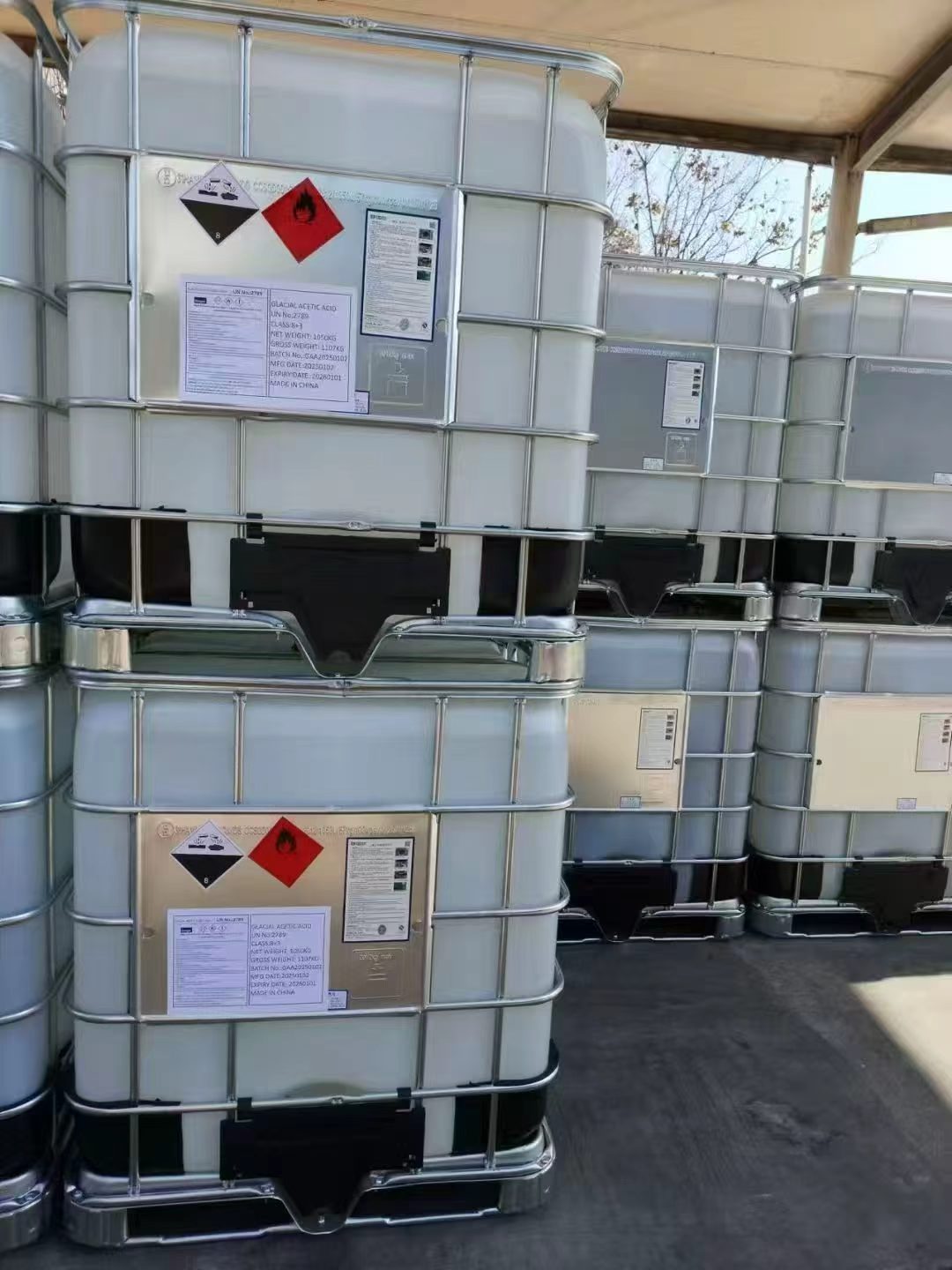
Glacial acetic acid is classified as UN2789, a dangerous good requiring special handling and packaging for transport. It falls under Class 3 (flammable liquid) and Class 8 (corrosive substance).
2. Purity Grades and Specifications
Acetic acid is available in several purity grades, each suited for different applications:
- 99.8% min (Glacial grade) — The highest purity, used in pharmaceutical synthesis, food-grade vinegar production, and chemical manufacturing. This is what VASTEC supplies.
- 99.5% min (Technical grade) — Suitable for industrial applications including coatings, adhesives, and textile processing.
- 80-99% (Dilute grade) — Used in water treatment, cleaning products, and some food applications.
When sourcing glacial acetic acid, always request a Certificate of Analysis (COA) verifying purity, color, moisture content, and heavy metal levels.
3. Packaging Options for Export
Proper packaging is critical for glacial acetic acid due to its corrosive and flammable nature. Here are the standard export packaging options:
IBC Tanks (1,050 kg net)
Intermediate Bulk Containers (IBCs) are the most popular packaging for bulk orders. Each IBC holds 1,050 kg of glacial acetic acid and is UN-certified for dangerous goods transport. IBCs are stackable, easy to load into containers, and ideal for orders of 20-24 MT per 20ft container.
200L HDPE Drums
Standard 200-liter polyethylene drums are suitable for smaller orders or buyers who need to repack. Each drum holds approximately 200 kg. A 20ft container can hold about 80 drums (16 MT total).
ISO Tanks (Bulk)
For large-volume buyers (20+ MT per shipment), ISO tank containers offer the most cost-efficient transport. ISO tanks hold 20-24 MT and are commonly used for chemical trade routes between China and Southeast Asia, Middle East, and Europe.
Packaging Comparison
| Packaging | Net Weight | Qty per 20ft | Best For |
|---|---|---|---|
| IBC Tank | 1,050 kg | 20-24 units (20-24 MT) | Regular bulk orders |
| 200L Drum | 200 kg | 80 drums (16 MT) | Smaller orders / repacking |
| ISO Tank | 20-24 MT | 1 unit | Large-volume buyers |
4. Global Market Overview
The global acetic acid market is valued at approximately $2 billion (2024), with China dominating both production and export. Here are the key market dynamics:
Top Exporters
- China — World's largest producer (100-120 million MT capacity). Key manufacturers: Yankuang, Jiangsu Sopo, Henan Longyu, Hengli Petrochemical.
- United States — Major producers: BP, Celanese (Texas Gulf Coast). Exports mainly to Latin America.
- India — Growing producer (GNFC, Dahej). Exports to Southeast Asia and Middle East.
- Saudi Arabia — SABIC and CTC. Exports to Asia and Europe.
- Malaysia/Singapore — BP-Amoco. Regional trading hub for Asia-Pacific.
Top Importing Countries
- India ($507M import value, 2024) — Largest global importer. VAM, coatings, pharma, and textile industries drive demand.
- Germany ($218M) — Major European consumer for VAM and chemical synthesis.
- Belgium/Netherlands ($195M) — Rotterdam hub for European distribution.
- Turkey — Growing market, also serves as a re-export hub to Middle East and North Africa.
- Vietnam/Indonesia — Fast-growing SE Asian markets with RCEP trade advantages.
- Mexico/Brazil — Latin American demand driven by coatings and adhesives.
5. Pricing Trends (2024-2026)
Acetic acid prices have shown moderate volatility in recent years:
- 2024: Global export prices ranged from $0.80 to $2.54 per kg, down from 2023 levels due to oversupply from new Chinese capacity.
- 2025: Prices stabilized as demand from India and Southeast Asia picked up, offsetting new capacity additions.
- 2026 outlook: Steady pricing expected. China's export competitiveness remains strong. Buyers locking in long-term contracts can secure favorable rates.
Price factors to watch: Methanol feedstock costs (China's coal-to-methanol economics), Indian production capacity additions, VAM demand cycles, and shipping freight rates.
6. How to Source Glacial Acetic Acid from China
China is the most cost-competitive source for glacial acetic acid, but sourcing requires careful supplier vetting. Here's what to look for:
Supplier Qualification Checklist
- ✅ Dangerous goods license — Must hold validdangerous goods license for acetic acid (UN2789)
- ✅ Export experience — Proven track record with COA, MSDS, and customs documentation
- ✅ Packaging compliance — UN-certified IBCs and drums meeting Class 3+8 requirements
- ✅ Third-party inspection — SGS, Bureau Veritas, or equivalent inspection available
- ✅ Payment flexibility — LC, TT, CAD options; Sinosure 90-day OA for qualified buyers
Required Documents
- Certificate of Analysis (COA) — purity, moisture, color, heavy metals
- Material Safety Data Sheet (MSDS) — hazard identification, handling, storage
- Certificate of Origin (CO) — for customs clearance
- Dangerous goods declaration — UN2789 classification
- Bill of Lading (BL) — shipping documentation
7. Why Choose VASTEC Chemical?
VASTEC Chemical (Ningbo Vastec Chemical Industrial Co., Ltd) is a trusted exporter of industrial chemicals with 12+ years of experience serving 30+ countries.
- ✅ 99.8% min purity — Higher than standard technical grade
- ✅ UN2789 certified packaging — IBC tanks and drums meet international dangerous goods standards
- ✅ Full documentation — COA, MSDS, CO, and SGS inspection available
- ✅ Competitive FOB pricing — Qingdao, Shanghai, Ningbo ports
- ✅ Flexible payment — LC, TT, CAD, Sinosure 90-day OA
- ✅ Fast response — WhatsApp, WeChat, email
Ready to source glacial acetic acid?
Contact us for a free quote and product specifications.
WhatsApp: +86-18054660518Or email: tina@nbvastec.com
8. Frequently Asked Questions
Q: What's the difference between glacial acetic acid and regular acetic acid?
Glacial acetic acid is the pure form (99.5-99.8%), while regular acetic acid solutions are diluted with water (typically 5-80% concentration). Glacial grade is required for chemical synthesis, pharmaceutical manufacturing, and VAM production.
Q: Is glacial acetic acid a dangerous good?
Yes. Glacial acetic acid is classified as UN2789, belonging to Class 3 (flammable liquid) and Class 8 (corrosive). It requires UN-certified packaging, dangerous goods documentation, and special handling during transport.
Q: What's the minimum order quantity (MOQ)?
Typical MOQ is one 20ft container (20-24 MT for IBC tanks, 16 MT for drums). Smaller trial orders may be available — contact us to discuss.
Q: How long does shipping take from China?
Transit times vary by destination: Southeast Asia 15-25 days, Middle East 25-35 days, Europe 30-40 days, South America 35-45 days, Africa 30-40 days.
Q: Do you offer samples?
Yes, free samples available for qualified buyers. Third-party inspection (SGS/Bureau Veritas) can be arranged at the loading port.
Q: What industries buy glacial acetic acid from China?
The top buyers are: paint and coating manufacturers (VAM production), pharmaceutical companies (API synthesis), textile manufacturers (dyeing agents), food processors (vinegar), and chemical trading companies (distribution).